Monday, September 20, 2021

Pumpkin Bread - updated!

I’ve tweaked my pumpkin bread recipe a little bit - the batter doesn’t get as lumpy, the loaves come out of the pans better, and it now has a pretty (but optional) cinnamon stripe!


Pumpkin Bread 
Dry:
3 cups granulated sugar (can sub in up to 1 cup brown sugar)
3.5 cups all-purpose flour (can sub in up to 1 cup whole wheat flour)
1 tsp cinnamon
1 tsp freshly grated nutmeg
1/2 tsp allspice
2 tsp baking soda
1/2 tsp baking powder
1.5 tsp table salt
 
Wet:
1 15oz can pumpkin puree
2/3 cup water
1/2 cup vegetable oil
4 eggs
1/2 tsp vanilla
 
Pans:
softened butter, about 2 Tbsp
1 Tbsp cinnamon*
4 Tbsp granulated sugar*
 
1. Preheat the oven to 350 degrees F. Brush the softened butter onto the sides and bottom of 3 8"x4" loaf pans (you can use other size loaf pans, but your bake time and yield will be different). Combine the 1 Tbsp cinnamon and 4 Tbsp sugar in a small bowl and coat the buttered pans with the cinnamon-sugar. You'll use maybe half of it for this - save the rest for later!
 
2. In a LARGE bowl, whisk all the dry ingredients together.
 
3. Add all the wet ingredients to the bowl of dry ingredients and mix well. A few small lumps are fine, but you don't want big ones.
 
4. Distribute half of the batter evenly between the three loaf pans. *Sprinkle the remaining cinnamon sugar evenly over the batter. (If you have some leftover, that's fine - I see cinnamon toast in your future!) Pour the remaining batter into the pans.
 
5. Bake for 45-55 minutes, rotating pans about halfway through. They're done when a toothpick inserted deep into the center comes out clean. Let cool in pans on a rack for 10-15 minutes before removing the loaves from their pans to keep cooling.
 
*Note: the cinnamon-sugar stripe in the middle is completely optional. If you don't want to do it, just make a smaller quantity of the cinnamon-sugar for lining the pans, keeping the 1 part cinnamon to 4 parts sugar ratio (changing the ratio makes the loaves more likely to stick to the pans!).

Friday, June 21, 2013

Johanna & Lee's Wedding Cake, and a Wedding Cake How-To


My dear friends, Johanna and Lee, were married last month, and I had the honor of making their wedding cake!  It was a beautiful wedding, and the reception was LOTS of fun.


One of their other friends made these figurines that went on top of the cake - aren't they ADORABLE? They look like the bride & groom!


The groom figurine was a little top-heavy, though, and after the 3rd hour standing on the cake, decided to take a header - he slid all the way to the bottom! I put him back up, with extra toothpicks, but he wasn't having it. He slid a couple more times, and then the catering manager decided to take steps to ensure the "groom's" cooperation:


He got tied up there with ribbon!  We all - the bride and groom especially - thought this was HILARIOUS.

The cake turned out so well, and I managed my time better than I ever have for a wedding cake - I had time to paint my nails the day of the wedding, and I got changed and to the ceremony on time. Miraculous!  It was a white cake with raspberry curd and marzipan filling, and the whole thing was frosted with a vanilla bean Swiss meringue buttercream frosting. I haven't made this type of frosting very often, because it is a bit of a process, but it makes the loveliest frosting.  I'll have to use it more frequently, especially for wedding cakes, because it gets so nice and smooth.


Below are detailed notes on how to make a cake like this one, including recipes, notes, and tools you'll need. 


Process notes on making this cake:
  • Don't plan to do this all the day of the wedding! I bought the marzipan on Wednesday, made the raspberry curd on Thursday, and baked the cakes and made half the frosting on Friday. Saturday I made the other half of the frosting, assembled and frosted the cakes, cut the dowels, took them to the reception site, set them up there, and then changed and went to the 4:30pm wedding.
  • You can make the cake layers ahead of time and freeze them, unfilled and unfrosted, if you want. My freezer is way too full for this!
  • I used simple syrup (which I already had on hand; you'll want to make it no later than the day before you assemble the cakes) to make sure the cakes were moist. It might not have been necessary, but I like to hedge my bets with wedding cake.
  • This cake, with its 6-inch, 9-inch, and 12-inch tiers, will serve about 100 people, if cut according to these plans. This INCLUDES serving the top tier; if the couple wants to save it, the cake will serve about 88 people.
  • Conveniently, making three tiers of these sizes (6-inch, 9-inch, and 12-inch) uses three batches of cake batter:  batch one fills both 9-inch pans; batch two fills one 6-inch pan and one 12-inch pan, and batch three fills the 6- and 12-inch pans again.


Assembly: 
  • Start with the smallest tier; it's easiest.
  • Put the bottom cake layer on its cardboard round on cake decorating turntable. 
  • Brush the top of the cake layer with simple syrup. Unwrap the second layer and brush one side of it with simple syrup, too, then set it aside. 
  • Pipe a dam of frosting around the edge with a 1/2-inch round decorating tip. 
  • Using a small offset spatula, spread a thin layer of raspberry curd inside the dam. 
  • Roll out the marzipan between two layers of waxed paper, until it's a little bigger than your tier in all directions. Cut a circle that is 1 inch smaller in diameter than your pan out of the marzipan and hold it over your cake. Trim more away if necessary; it's better that it's a little too small than too big.  Place the marzipan on top of the cake, inside the dam. 
  • Spread a very thin layer of curd on top of the marzipan - the dam should still be taller than the rest of the filling.  (See photo below) 
  • Place the second layer on top of the filling, simple syrup facing down, making sure it's lined up evenly.  
  • Spread a verrrrry thin layer of frosting all over the cake - this is the crumb coating, which will help keep the crumbs from marring your beautiful frosting.  
  • Place the cake in the fridge or freezer for 10-20 minutes, until the frosting is firm enough that touching it won't leave a fingerprint (I worked on the next tier during this time).  
  • When it's firm, remove the cake from the fridge/freezer and frost the cake. Repeat with remaining tiers. Don't pipe the pearls on at this point; save that for when you stack them at the site.
  • When done frosting, put each cake tier into its box.
  • For support, you'll need a total of 7 dowel pieces: 4 go in the bottom tier, 3 go in the middle tier. Making sure they're all covered by the tier that will go above, mark out where the dowels will go (you'll make a square of them for the bottom tier, and a triangle for the middle - doesn't need to be perfect).  Push one long dowel into the bottom tier, and mark where the frosting ends. Pull it out, and cut the dowel about a millimeter below that mark. Cut three more of the same length.  Repeat the process for the middle tier.
  • Take the cakes wherever they need to go. Stack them once you get there, and pipe the pearls on to hide the seams.
  • Decorate with flowers, toppers, etc. 
  • VoilĂ , you have a wedding cake!

Cake layer with frosting dam, raspberry curd, and marzipan
(the marzipan is hard to see here, but it's there!).


Special tools you'll need to do this:
  • Cake pans: you'll need 2 9-inch cake pans, and at least 1 6-inch and 1 12-inch pans, with 2-inch sides. Professional-style is best: they'll have tall, straight sides. The ones you get at Target, Fred Meyer, Macy's, etc., usually have 1- or 1.5-inch tall sides, and they slant outward slightly. It's hard to get lovely straight cake layers with those pans!
  • At least 3 cake cardboards for each tier, the same size as your pans (so 3 6-inch rounds, 3 9-inch rounds, and 3 12-inch rounds).
  • A cake box for each round: one 7-inch cake box, one 10-inch cake box, and one 14-inch cake box.
  • Doweling for support. I like these or these, both of which are pretty easy to cut with kitchen tools.
  • Piping bags and tips. I used an Ateco #805 for piping the dam, and a #8 for the little pearls around the outside of each tier.
  • I used a "cake plate" from the cake decorating store - it was cardboard, covered with pretty food-safe, greaseproof silver paper. If you go this route, get one that's at least 16 inches in diameter.
  • Small offset spatula (about 3.5").
  • Small straight spatula (like offset, just not actually offset - about 4")
  • Medium straight or offset spatula, mostly for helping to move cake tiers to and from the fridge (about 6")
  • Large straight spatula, for frosting the cake (about 8")
  • Cake turntable


Recipes:


The Cake
Dorie Greenspan's Perfect Party Cake, adapted slightly from bakedbree.com

The recipe here is for ONE batch; you'll need three batches to make this into a wedding cake.  I suppose you could make all three in one big batch, if you had a commercial mixer, but I did them one at a time.

See notes above for how to divide the batches between your wedding cake pans.

2 1/4 cups cake flour
1 Tbsp baking powder
1/2 tsp salt
1 1/4 cups buttermilk*
4 egg whites
1 1/2 cups sugar
1 stick (4oz, 8 Tbsp) unsalted butter, room temperature
2 tsp vanilla extract


Preheat the oven to 350°.

Butter two 8- or 9-inch cake pans, line with parchment paper, and butter and flour the lined pans (you can use Baker's Joy or other flour-infused baking spray instead of the butter and flour, if you wish). Set aside.

In a medium bowl, sift together cake flour baking powder, and salt (note: for most recipes, I'll whisk rather than sift, but cake flour can be clumpy - so I recommend that you actually sift them this time.).  In a separate bowl or measuring cup, whisk together the buttermilk, vanilla, and egg whites.  In the bowl of your mixer, cream together the butter and sugar until fluffy, about 3 minutes.

Add 1/3 of the flour mixture to the mixer. Add 1/2 of the buttermilk mixture, mixing until well combined. Scrape down sides, and continue adding the flour and buttermilk alternately, ending with the flour.

Divide batter between prepared pans, smoothing the tops.  Bake for 30-35 minutes, until a toothpick inserted in the center comes out with just a few dry crumbs on it, rotating and switching pan position in the oven halfway through.

Cool in the pans for 10-15 minutes, then turn out onto a cooling rack. Cool completely. Frost as desired.

*I've learned the hard way: don't use powdered buttermilk for cakes. It just isn't the same, and the cake ends up dry. If you don't have buttermilk, it's better to substitute milk that's been soured with lemon juice or vinegar.


The Filling

Simple Syrup
Makes about 1 1/2 cups

1 cup water
1 cup sugar

In a medium saucepan, combine the water and the sugar. Bring to a boil over medium-high heat. Boil, stirring constantly, until sugar has completely dissolved, then remove from the heat. Let cool. Store in the fridge for up to 2 months.


Raspberry Curd, adapted slightly from Tea and Cookies
Makes about 3 1/2 cups

12oz. raspberries (or any combination of raspberries, blackberries, tayberries, etc. You can use fresh berries or berries that have been frozen and thawed. For this I used 10oz raspberries and 2oz blackberries, both from frozen.)
1 cup sugar
4 eggs
4 Tbsp lemon juice (I usually use the bottled stuff, but feel free to use fresh.)
1/2 stick (2oz, 4 Tbsp) unsalted butter
1/4 tsp salt

In a medium saucepan, cook the berries, sugar, lemon juice, butter, and salt over medium heat. Stir occasionally, and cook until the fruit is soft, the butter is melted, and the sugar is dissolved.

Meanwhile, whisk the eggs together in a separate bowl.

When the fruit is cooked, slowly stir ladlefuls of the fruit mixture into the eggs, whisking continuously, until about half of the fruit is in the eggs.

Slowly stir this egg-and-fruit mixture back into the saucepan, whisking continuously. Cook it over low or medium heat, stirring the whole time, until the mixture thickens slightly. Don't let it come to a boil!

Place a mesh strainer* over a large bowl (not the same one the raw eggs were in!). Pour about half of the mixture into the strainer and use a spatula or wooden spoon to stir it around and press it through the mesh, so the seeds are left behind. Discard the seeds and repeat with the rest of the curd.  Pour it into jars or other small containers and refrigerate or freeze. It will stay good in the fridge for about a week, or in the freezer for a few months. (I love this on toast or English muffins or waffles, or on ice cream, especially vanilla ice cream over a brownie. YUM.)

*So, strainers. If your strainer is REALLY fine mesh, it'll take forever to push the curd through it and you will never make this again. If your mesh isn't fine enough, some of the seeds will get through. Just know that this makes a difference.


The Frosting
Swiss Meringue Buttercream, adapted slightly from Smitten Kitchen
with information and advice from Beyond Buttercream (read the comments, there's lots of info there!)

Makes enough to frost a 6-inch tier, a 9-inch tier, and a 12-inch tier (all round tiers, not square), pipe the pearls you see, and have about 2 cups left over. I'm not sure this would have been enough to also do the filling for these cakes, or to have frosted them if they'd been 3 layers each instead of 2. It's nice to have some left over, anyway, for fixing problems that happen in transportation, etc.

I divided this in half and made it in two batches, because there's no way this whole batch would have fit in my 5-quart mixer - a half-batch filled it up almost entirely!  Because the vanilla beans were really different sizes, and because I am crazy and wanted to make sure the frosting all looked the same, I stirred the two half-batches together once they were made, to even out the specks of vanilla bean.

2 cups egg whites (this was 16 large egg whites, for me)
3 cups sugar
2 1/2 pounds (5 cups, 10 sticks) butter, softened - take this out of the fridge the night before!
2 vanilla beans
1 scant Tbsp vanilla extract

Put the egg whites and sugar in the bowl of your mixer. Set the bowl over a saucepan that has about an inch of simmering water in it. Whisk until the egg whites reach 140° and you can't feel the sugar granules when you rub the mixture between your fingers.

Remove the mixer bowl from the saucepan, and put it in your mixer, which has been fitted with the whisk attachment. Whip on high speed until stiff peaks form AND until the mixture is no longer warm - you want it to be body temperature or cooler. Keep whipping until both of these conditions are met.

Once the mixture is stiff and cool, switch to your mixer's paddle attachment.  Add the vanilla beans and the vanilla extract and stir on low for a couple of seconds.

Add the butter, one stick at a time, stirring on LOW for a couple of seconds (or, if you're me, as long as it takes you to unwrap the next stick of butter) after each. Here's where it gets a little scary: you've made this beautiful, fluffy meringue, and it's going to look awful - like you've ruined it! - when you add the butter.  But keep beating it, on low, and it will come together. First it will look soupy, and then curdled, and you'll start freaking out - but then it will turn creamy, and you'll breathe again: you've done it!  Depending on the temperature and the size of the batch, you may have to keep beating for 15 minutes, but don't worry: it will come together. And it will be the smoothest, loveliest frosting ever.

You can keep this at room temperature for about 24 hours, or in the fridge for a few days (bring it thoroughly up to room temperature before whipping again). I'm told this freezes well, too, but I haven't had occasion to try it.

Wednesday, June 12, 2013

Year-End Teacher Gift: Oatmeal Scone Mix and Strawberry Jam


Ah, the end of the school year! The first year my son was in preschool, I was caught completely off-guard by teacher gifts. There was a picnic the last day of school, and many of the other parents had nifty little things for the teachers, and it hadn't even crossed my mind! It may have been because my son was going to be with them all summer, but I still wish I'd thought to express my appreciation for his teachers, who we loved.

Last year I was ready - I hit on this idea of homemade jam and homemade scone mix.  I liked it so much that I did it this year, too (for a new set of teachers)!  I wanted to give his teachers something from us, and since I bake so much (and bring baked goods to school), I liked the idea of a baked good.  I also figure the teachers don't need lots of little tchotchkes from every student every year - I like that they can use this up and repurpose or recycle the jars.

I think this would make a nice hostess gift, as well - the recipient doesn't have to do a lot of work or have special tools, ingredients, or skills to make the scones.  I made a jar of the scone mix for us, too, because it's convenient to have on hand!

I made and canned the jam last weekend (so convenient that our favorite farmer's market opened for the season last week!), so it's nice and fresh and they can keep it for a year if they want to.  I don't really use a recipe for strawberry jam; it depends on how many berries I'm using, and how fresh they are, and that sort of thing.  I generally use lime juice, sugar, honey, and Pomona's Universal Pectin in my jam, because I don't like it too firm or too sweet.  There are tons of recipes around!


The scone mix is just the wonderful Cook's Illustrated Oatmeal Scone recipe, without the wet ingredients.  I toasted the oats the night before, so they have time to cool.  I mixed the flour, sugar, salt, and baking powder in the food processor, cut in the butter, stir in the toasted oats, and put it all in a quart-size mason jar. You'll have to bang the jar on the counter after every few scoops, in order for it all to settle and fit in the jar, but if you do that it will fit! The reserved oats for the bottom and top of the scones go in a tiny baggie just under the lid. Note the "use by" date on the butter you put into the mix: that's the use-by date for the mix, too (it does need to be refrigerated).  I typed up the instructions and other labels and printed them on a big, full-sheet-size label, and stuck it on the side of the jar. (Here's a pdf of that file, so you can use it.)

I tied a nice little ribbon around each jar, with a note for each teacher, and put the scone mix and the jam in a gift bag.  My son drew cards for his teachers, and we had a nice, personal, teacher gift!  I made four of these this year, and all of this assembly (with the oats already toasted, the jars washed, and the labels printed) took me under an hour to do (we won't talk about how long it took me to get the labels right...).  The teachers loved it!


Monday, February 18, 2013

Sockerkaka (Swedish Cardamom Cake)


This cake is a new one to me, and I'm so glad I found it - because it's both lovely to eat and simple to make.  This is a sockerkaka, which means "sugar cake" in Swedish.  The cardamom is optional, says my Swedish sister-in-law, but it's so wonderful that I don't see myself leaving it out (and I am not always a fan of cardamom!).  It's a delicate cardamom flavor here, almost more scent than flavor, and it's perfect.

This is also one of those great "dump everything in a bowl and mix it" recipes, so I can see myself using it as a jumping-off point for cakes with other flavor profiles (in which case I would leave out the cardamom, most likely).  I think it would be great with chocolate chips, or nuts, or cinnamon, or berries, or any number of things!


Sockerkaka
from The Great Scandinavian Baking Book
Serves at least 12

Note: The recipe calls for a "9-inch tube-type fancy mold," by which she probably means something like a kugelhopf pan, but I don't have one of those.  I made mine in a star Bundt pan, which is a 10-cup pan, I believe, and it worked great.  It would work in a 12-cup Bundt pan, too, but would be shorter. I'm willing to wager you could also use 2 standard loaf pans.

2 cups all-purpose flour
1 1/4 cups sugar
2 tsp baking powder
1 tsp cardamom (I do not crush my own. If you do, more power to you - and the cardamom flavor will be stronger in your cake!)
1/2 tsp salt
3 eggs
1 1/2 cups whipping cream
bread crumbs or vanilla wafer crumbs, for coating pan (I use store-bought bread crumbs)


Preheat your oven to 350°F.  Butter a Bundt pan (see note above), or use cooking spray (this is what I do; it gets into all the nooks and crannies better that way, I find).  Coat the pan with the bread or wafer crumbs and set aside.

In a large bowl, combine the flour, sugar, baking powder, cardamom, salt, eggs, and whipping cream.  Mix at low speed for 15-30 seconds, until just blended. Scrape down the sides of the bowl, and mix at medium speed for 3 minutes.

Pour into prepared pan, and bake for 55-60 minutes until a toothpick inserted into the center of the cake comes out clean.  Remove from pan immediately; cool on a rack. Just before serving, dust with powdered sugar.


Wednesday, January 30, 2013

Hazelnut & Cocoa Nib Pound Cake


This cake was born after an afternoon spent looking through cookbooks, recipe binders, pins, and links, and not finding something that precisely matched the vague idea I had in my head.  I usually hate when that happens, but this time I'm so glad it did because it made me come up with this - this cake that was exactly what I wanted.  It's soft and dense, not overly sweet or fussy, nutty, and gently chocolatey - but with a fantastic sharp crunch from the cocoa nibs.  It was great with whipped cream, but would be outstanding with coffee ice cream, I think.  I wish I'd had time to get some before the cake was all gone!


Hazelnut & Cocoa Nib Pound Cake
adapted from Smitten Kitchen
Serves 12-14

1 1/2 cups (3 sticks) unsalted butter, at room temperature
1 8oz. package cream cheese, at room temperature
1 1/2 cups granulated sugar
1 1/2 cups brown sugar
6 large eggs
1 1/2 tsp vanilla extract
1/2 tsp almond extract
3 cups all purpose flour
1 tsp salt
1 tsp freshly grated nutmeg
1 to 1 1/2 cups chopped toasted hazelnuts
1 1/2 cups cocoa nibs

1. Preheat the oven to 325°F.  Butter and flour a 12-cup Bundt pan (I'm a big fan of the cooking spray with flour in it, like Baker's Joy, for Bundt pans.  Saves a ton of work and gets better coverage than I do with butter!)

2. In the bowl of a stand mixer (or in a large bowl, with an electric mixer), beat the cream cheese and butter on medium speed until smooth.  Add both of the sugars, increase the speed to high, and beat until light and very fluffy, at least five minutes.  Add the eggs, one at a time, beating after each. Scrape down the sides of the bowl after every 2-3 eggs.  Add the vanilla and almond and stir briefly.  Add the flour, salt, and nutmeg all at once.  Beat until just incorporated.  Fold in the hazelnuts and cocoa nibs.

3. Pour the batter into the prepared pan, shaking a little to smooth out the top and get rid of big air bubbles.  Bake for 60-75 minutes, until the cake is dark golden brown and a toothpick inserted into the cake comes out clean.

4. Cool on a rack for 20 minutes, then remove cake from the pan and let cool completely. Serve at room temperature.


Wednesday, March 7, 2012

Brown Sugar Graham Cookies


These cookies are so simple, and SO good... I grew up with them, and I have no idea where my mom got the recipe.  Mom made them last Christmas, and we realized that while these cookies are good with light brown sugar, they are AMAZING with dark brown sugar.  It makes a big difference!  


Brown Sugar Graham Cookies
Makes about 48, depending on how you cut them


Ingredients:

1lb. box Nabisco graham crackers (3 packs), broken into squares
1 ½ cups unsalted butter (3 sticks)
2 C. packed dark brown sugar
1 C chopped walnuts

  1. Preheat the oven to 350°.  
  2. Spread 1 layer graham crackers in greased 10 x 15” pan.  You may need to break them into the small rectangles to get a full layer. 
  3. Combine HALF of butter and HALF of brown sugar (3/4 cup and 1 cup, respectively) in small saucepan.  Bring to a boil and let boil 3 minutes.  Pour syrup over crackers; bake for 10 mins.
  4. Meanwhile, combine remaining butter and brown sugar in the saucepan, making another batch of the syrup.  Add walnuts when it starts to boil. 
  5. When the pan comes out of the oven, add another layer of grahams (It’s important to act quickly when adding the second layer, otherwise the layers don’t stick together). Pour syrup over, and bake 10 more minutes.
  6. When slightly cool cut in strips.  If you wait too long to cut, they break.

Tuesday, August 30, 2011

Concord Grape Pie


I married into this pie - so to speak - and oh, I'm so glad I did. You've probably never heard of a grape pie - it does sound weird, doesn't it? But if you can find Concord grapes where you are, you should make this. It's like grape juice in pie form, and it's delicious. It tends toward the sweet, so it's best with vanilla ice cream or, in a pinch, whipped cream.

Concord grapes have a really short season here in Seattle, so grab the grapes when you see them! The season is usually sometime in September, but the weather has been so weird this year that I'm keeping an eye out now. Alas, Concord grapes are not seedless, so you have to get the seeds out of them before you can make the pie. Just put on some comfy shoes and some good music and you'll be done in no time!


Grape Pie
serves 6-10

Filling:
1 ½ pounds (~4 cups) Concord grapes
1 cup sugar
1/3 cup all-purpose flour
¼ tsp salt
1 Tbsp. lemon juice
2 Tbsp. butter, melted

Bottom Crust:
Your favorite crust, homemade or store-bought

Top Crust:
½ cup flour
½ cup sugar
¼ cup butter

Filling: Slip skins from grapes (just squeeze them and the insides will eject); set skins aside. Bring pulp to a boil; reduce heat &simmer for approx. 5 minutes (until grapes fall apart). Press pulp through sieve to remove seeds; addskins to pulp.

Combine sugar, flour, and salt; add to grapes. Add lemon juice and butter; mix well. Pour into pie shell.

Crust: sift flour and sugar. Cut in butter until crumbly. Sprinkle over pie.

Bake at 400° about 40 minutes, until the top crust is just getting color around the outer inch or so.


Bonus: if you want to be able to make this pie when the grapes are not in season, you can can the filling in a hot water canner - just omit the flour and butter. When you open the jar to make the pie, stir in the flour, and then add the butter and dump the whole thing into the pie crust. It works great!

Friday, August 12, 2011

Peanut Butter Cream Pie - for Mikey


Sunday night, my Twitter stream sort of blew up with shock and sadness - I didn't know exactly what happened until Monday morning, but the food blogging community was reeling from the sudden loss of Mikey Perillo. His wife, Jennifer, is big in the food world.  I didn't read her blog, or follow her on Twitter, but I knew of her nonetheless. I knew she had young kids, and I was stunned by the news.

Later in the week, she posted about how fleeting life can be, and reminded us to treasure our loved ones while we can - don't put off loving them until tomorrow, because tomorrow is not guaranteed to arrive.  She asked that people make Mikey's favorite pie on Friday, and that we share it with people we love, because she'll never get to share it with him again.

So I did.  Peanut butter cream pie is not my husband's favorite (though I'm pretty sure he'll like it), so I'll make his favorite pie in the next few days.  For today, though, we have this pie, and we have each other and our son. And even though there are still things we long for in our life, today we'll remember to be thankful for life and love and the abundance we have been given.

Recipe: Peanut Butter Cream Pie

Tuesday, July 5, 2011

Strawberry Hand Pies

DSC_1296

Today is my husband’s birthday (happy birthday, honey!), and he is a pie guy. He’d much rather have pie than cake, most of the time.  Conveniently, it’s also Pie Party day!

I love making small pies, especially strawberry – I love the flavor of the cooked, jammy strawberries, I love that everyone gets more crust, and I love that I don’t have to try to get the slices to hold together!

We just got back from camp yesterday, and I was running short on time and energy (camp is SO fun and SO exhausting), so I used store-bought crusts.  I used one Pillsbury and one from Grand Central Bakery here in Seattle, and the Grand Central ones held up MUCH better than the Pillsbury ones – I know which I’ll keep in my freezer from now on!


DSC_1284


I got this fun little mini-pie maker a couple of months ago.  It’s supposed to make the pies round, with the filling area star-shaped, but the star shaping gets lost in the baking process.  I don’t really care – it’s still pretty fun and easy to use.  It has a cookie-cutter side to cut the dough, and is hinged to press the crust pieces together with the filling inside.


DSC_1292


Strawberry Hand Pies
from Martha Stewart
Makes 8-10 pies

Ingredients:

  • roughly 3 cups strawberries, hulled and halved or quartered, depending on the size of the strawberry
  • 4 Tbsp sugar
  • 2 Tbsp corn starch
  • Pre-made pie crusts for 2 double-crust pies (4 rounds of store-bought crust)
  • 1 egg
  • water
  • sanding sugar (optional; can also use granulated sugar)
Instructions:
  1. Preheat the oven to 425°.  Line 2 cookie sheets with parchment paper or a silpat.
  2. Stir together the strawberries, sugar, and corn starch in a medium bowl.  Let sit while you prepare the crusts.
  3. Cut an even number of 5-inch rounds from the crusts.
  4. Put about 2 Tablespoons of filling in the middle of half of the rounds.
  5. Brush the edges of the filled rounds with egg wash.
  6. Top each filled round with another unfilled round.  Press and crimp the edges to seal.  Place the pies on the prepared cookie sheets.
  7. Cut a vent in each round.
  8. Brush each pie with more egg wash, and sprinkle with the sanding sugar.
  9. Bake for 20-25 minutes, until golden brown.
  10. Keeps in sealed container at room temperature for up to 2 days.

Monday, June 6, 2011

Oatmeal Scones

DSC_0984

I don’t know if I’ve mentioned it here before, but I’m not really a scone fan.  Even if they have good flavor, they tend to be dry and crumbly and just… disappointing.  I figured this was how scones were supposed to be, and that they just weren’t my thing. So I’d pretty much given up on them until I tried these.  My friend Rebecca made them for a baby shower and – knowing that she makes good food – I tried one.  Well!  They were anything BUT disappointing, and I smuggled one home in my purse.

Turns out I’d had the recipe for YEARS, as it’s in a 2003 issue of Cook’s Illustrated!  I made them a couple of weeks ago, and they’re easy and really good.   Not dry and crumbly!  I don’t think they need anything on them and will happily eat them plain, but my husband and son liked them with jam or honey.  I was hoping these would be healthy enough to make a batch a week and have one for breakfast every morning, but… I plugged the ingredients into an online nutritional calculator, and let’s just say that health food they are NOT. Despite the oatmeal.  Alas.

Make them anyway, though!  Just not for every day.  They keep well, too, if you don’t eat them all the day they’re made.

Oatmeal Scones
from Cook’s Illustrated, Sept/Oct 2003
Makes 8 scones

  • If you use King Arthur flour (or another higher-protein brand of flour), ad an additional 1-2 Tbsp milk.
  • You can substitute half-and-half for the milk/cream mixture (I did).
Ingredients
1 1/2 cups (4.5 oz) old-fashioned rolled oats or quick oats
1/4 cup whole milk
1/4 cup heavy cream
1 large egg
1 1/2 cups (7.5 oz) unbleached all-purpose flour
1/3 cup (2.25 oz) sugar, plus 1 Tbsp for sprinkling
2 tsp baking powder
1/2 tsp salt
10 Tbsp cold unsalted butter, cut into 1/2-inch cubes

  1. Preheat oven (with rack in middle position) to 375°.  Spread oats evenly on a baking sheet and toast in oven until fragrant and lightly browned, 7-9 minutes (it took me more like 10-11 minutes).  Cool on wire rack.  Increase oven temperature to 450°.  Line second baking sheet with parchment paper.  When oats are cooled, measure out 2 Tbsp and set aside.
  2. Whisk milk, cream, and egg in a large measuring cup until incorporated.  Remove 1 Tbsp to a small bowl and reserve for glazing.
  3. Pulse flour, 1/3 cup sugar, baking powder, and salt in a food processor until combined, about 4 1-second pulses.  Scatter cold butter evenly over dry ingredients and pulse until mixture resembles coarse cornmeal, 12-14 1-second pulses.  Transfer mixture to medium bowl; stir in cooled oats.  Using rubber spatula, fold in liquid ingredients until large clumps form.  Mix dough by hand in bowl until dough forms cohesive mass.
  4. Dust work surface with half of reserved oats.  Turn dough out onto work surface and dust top with remaining oats.  Gently pat into 7-inch circle about 1 inch thick.  Using bench scraper or chef’s knife, cut dough into 8 wedges and set on parchment-lined baking sheet, spacing pieces about 2 inches apart.  Brush surfaces with reserved egg mixture and sprinkle with 1 Tbsp sugar (you can use sanding or decorator’s sugar here, if you have it).  Bake until golden brown, 12-14 minutes.  Cool scones on baking sheet on wire rack for 5 minutes, then move scones to cooling rack and cool to room temperature, about 30 minutes (or, y’know, don’t.  They were wonderful warm!).

Wednesday, May 18, 2011

Chocolate-Cinnamon Challah

4667591730_e3d985a906_o

On Saturday, I had the fun of participating in the Food Blogger Bake Sale.  Food bloggers all over the country were putting on bake sales, benefiting Share Our Strength – a great organization whose goal is ending childhood hunger.

It was a TON of fun – I got to meet so many local food bloggers!  We were at the Uptown Metropolitan Market and lots of people came and bought our wares.  We had all sorts of goodies – cake pops, cookies galore, homemade marshmallows, cashew bacon brittle (really good), whoopie pies, cobbler, cake in jars (!) (courtesy of the lovely and crafty Megan of Not Martha), brownies – lots and lots of yum.

My contribution was my chocolate-cinnamon challah, something I’ve been playing with for a year or so now.  It’s basically poor-man’s babka, which is where I got the idea.  I didn’t take any home with me, so I think it was a hit!

NB: “Challah” doesn’t start with the usual “ch” sound – it’s closer to “HA-la.”  If you can do that back-of-the-throat sound like at the end of “Bach,” so much the better!

NB2: The basic challah freezes beautifully and makes FANTASTIC French toast and bread pudding.  Can’t be beat.


4667592198_506d0fe5fe_b


Basic Challah Recipe
Adapted slightly from Bria
Makes 2 large or 3 medium loaves

Ingredients
6 – 7 cups all-purpose flour
6 tsp (2 Tbsp) active dry yeast (not quite 3 packages)
½ C sugar
1 ½ t salt
1 stick unsalted butter, at room temperature
1 1/3 C hot tap water
4 whole eggs (preferably at room temperature), plus 1 egg yolk (save the white! you’ll need it later.)
Splash of milk
Oil for the bowl

  1. Combine 2 cups of flour with the yeast, sugar, and salt stand mixer fitted with the paddle and stir well.
  2. Add softened butter and stir again. It will look like wet sand, not a cohesive mass. 
  3. Add the hot tap water and beat at medium speed for 2 minutes until well mixed and elastic.
  4. Add the eggs & yolk, and 1 ½ cups more flour. Beat at high speed for 1 minute or until thick and elastic.
  5. Switch to the dough hook attachment, and stir in the remaining 2 1/2 – 3 1/2 cups of flour.  (The first time you make this, go for 3 cups.  As you make it more, you’ll have a better idea of your preferences and you’ll know the dough better, and will be better able to gauge how much flour is necessary.) 
  6. Once the flour is incorporated, knead for 5-10 minutes until it is smooth and elastic.  I usually let my mixer to the kneading first, then move it to a floured surface and finish it by hand. You can keep adding flour as you knead, so the dough doesn’t stick to my hands or the counter.  I go by the windowpane test to know when it’s kneaded enough.
  7. Wash and oil the mixing bowl. Place the dough in the bowl, turn it over once to ensure it’s well-coated, and cover with a clean dish towel for 20 minutes. The dough will swell slightly, but do not expect an overtly visible change.
  8. There are lots of ways to shape your loaves – braids are traditional.  I do 6-part braids (it’s easier than it sounds, I promise!), and I use a digital scale and a bench scraper so everything is even.  Start by dividing it into two equal pieces (or three, or however many loaves you want to make). Place one piece on your work surface and set the others aside, keeping them covered with a towel or plastic wrap.  Divide your working dough into however many pieces you need, and roll each piece into a long snake.    Try to get the snakes roughly the same length and thickness.  You don’t need to be all that gentle with it – this dough is meant to be played with!  Press the snakes together at one end and get to braiding!  Here’s a great video for the 6-strand braid, or you can to simpler 3- or 4-strand braids. Whichever you choose, when you’re done braiding, tuck the ends underneath the loaf and move it to a parchment-lined baking sheet.  Repeat with other parts of the dough. 
  9. You can either bake immediately or cover the loaves loosely with plastic wrap and refrigerate for 2-24 hours.  When you are ready to bake, remove the loaves from the refrigerator and let them begin to come to room temperature while you heat the oven to 355 (approximately 10-15 minutes). Beat the egg white in a small dish with splash of milk and gently brush over the loaves. Bake them for 35-40 minutes, slightly less if you went with three loaves as they will be smaller. When they are done, the loaves will be a rich, golden brown and will sound hollow when thumped on the bottom.

      4666971255_176cdbc214_b


      Upgrading Basic Challah to Chocolate-Cinnamon Challah

      Chocolate-Cinnamon Filling

      Ingredients
      1 lb semisweet chocolate, chopped (or chocolate chips or mini chocolate chips*)
      1 Tbsp cinnamon
      1/2 cup sugar
      3/4 stick butter (6 Tbsp), cut into 1-inch pieces

      This is most easily done in the food processor – put the chocolate in first and grind it until it’s finely chopped.  Add in the cinnamon and sugar and combine thoroughly.  Add in the butter and mix well but don’t liquefy it.
      *If you use mini chocolate chips, you can skip the food processor altogether and just mix everything together, adding the butter last.


      Adding the Filling
      1. Make the basic challah dough through step 7, and make the chocolate-cinnamon filling.  Divide the dough as above, making your dough snakes.  Using a rolling pin, flatten one snake at a time.  Make the dough quite thin, and roughly rectangular. Try to keep it roughly the length it was before you started rolling it out.
      2. Sprinkle some chocolate filling evenly over the dough, leaving about a half-inch strip along one long edge. (I just eyeball the amount of filling needed – half of the batch per loaf, divided by the number of strands I’m braiding plus one, so that I have some left to put on the outside of the loaves.)   Press the filling into the dough.
      3. Roll the snake back up like a skinny cinnamon roll, pressing it together after each roll.  Pinch the seam to stick it together.  Set aside and repeat for remaining snakes.
      4. Sprinkle the little bit of remaining filling on your work surface and put your snakes down for braiding.  Braid the dough, pressing the little bits of filling to the outside as you go.  Use up all that filling!  (If you run out of filling for the outside, you can toss some mini chocolate chips in cinnamon and put those on the outside.  I like to have an external indicator of the internal goodness.)
      5. Repeat with remaining dough, and continue with step 9 above.  Slice and enjoy!  It also freezes beautifully.  I haven’t tried making bread pudding with it, but I bet it would be amazing!

      Saturday, April 16, 2011

      Socks! Finished Socks!


      DSC_0732
       
      Hey, lookit that!  I finished a whole pair of socks!  It only took me a year (or more, maybe…) and 2 3 4 start-overs.  Turns out I have really, really loose gauge.  I hadn’t noticed just how loose it was, because I tend to make things that don’t depend on gauge, but my sock attempts kept turning out HUGE.  These were knit on size 2 needles even though the pattern calls for size 5.  Yeah.  But once I figured that out and decided to, y’know, actually swatch for socks, it was smooth sailing.

      And I cast on my second pair (a different pattern) approximately 8 hours after finishing this pair, so it seems I’ve caught the sock-knitting bug (cue groans from my husband as he anticipates more money being spent on yarn)...
       

      Speaking of yarn – this is lovely stuff.  It’s Rios by Malabrigo, a Superwash Merino, roughly worsted weight.  I love the colorway, and it’s a dream to knit up.  Highly recommended!


      Monday, March 28, 2011

      Hazelnut Muffins, with Teff Flour

      DSC_0342


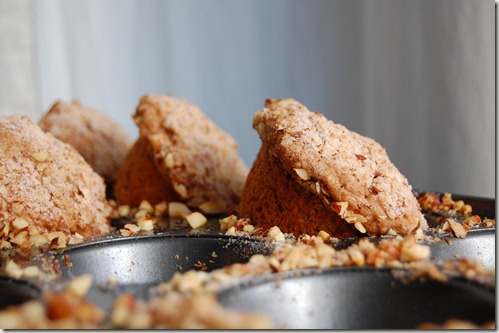
      These muffins are from Kim Boyce’s much-heralded Good to the Grain, and they are lovely.  I’d never used teff flour before, but I’ll definitely continue to use it!  It has sort of a delicate grassy flavor that is faintly sweet.  It’s wonderful in these muffins!

      The only thing I’d like to change about these muffins is the body-to-topping ratio.  There was too much topping for the 12 muffins I got (you can see how much of it fell off – and the recipe was only supposed to yield 10 muffins!) and at the same time, there wasn’t enough of it for each bite of muffin.  I think next time I’ll fold half of the topping into the batter and see how that works out.


      DSC_0334

      Hazelnut Muffins
      from Good to the Grain

      1 stick unsalted butter
      1/2 cup raw hazelnuts, skins on, chopped into rough halves
      1/2 tsp kosher salt

      For topping:
      1/2 cup raw hazelnuts, skins on, finely chopped
      1/4 cup sugar
      1 tsp freshly grated nutmeg
      1/2 tsp cinnamon

      For muffins:
      Dry mix:
      1 cup whole wheat flour
      3/4 cup teff flour
      1/2 cup all-purpose flour
      1/2 cup sugar
      1 Tbsp baking powder
      1/2 tsp baking soda
      1 tsp kosher salt

      Wet mix:
      1 cup buttermilk
      1/2 cup plain yogurt
      2 eggs
      1 tsp vanilla extract

      Preheat oven to 350°.  Grease muffin tins with butter or cooking spray.

      Place the butter, hazelnuts, and salt in a small heavy-bottomed pan and cook over medium heat, swirling the pan occasionally and watching for the edges of the nuts to turn golden brown.  Remove the pan from the flame before the nuts get too brown, as they will continue to cook in the hot butter.  Pour them into a bowl to cool down.

      In a small bowl, stir together the topping ingredients. Set aside.

      Sift the dry ingredients into a large bowl.  In a medium bowl, whisk the wet ingredients until thoroughly combined. (This is where I'd fold in about half of the topping, after combining the other ingredients.)

      Pour the hazelnuts and their butter over the dry ingredients, and then pour the buttermilk mixture over the top of that.  Using a spatula, mix together the wet and dry ingredients.

      Scoop the batter into 10-12 muffin cups.  The batter should be mounded above the edges of the cups.  Sprinkle the topping evenly over the batter, gently pressing it into the batter so it adheres.

      Bake for 22-26 minutes, rotating the pan halfway through.  Let cool on a rack in the pan until they’re cool enough to handle. Remove each muffin from its cup and set it on its side in the cup to cool (this will keep them from getting soggy).

      Tuesday, March 8, 2011

      Semla

      DSC_0577


      Happy Fat Tuesday!  In Swedish, “Fat Tuesday” is “Fettisdag,” and the traditional treat is a Fettisdagbullar – also known as Semla (Semlor if you’re talking about more than one).  Semlor are cardamom bread rolls filled with an almond paste mixture and topped with whipped cream and powdered sugar, and they are GOOOOD.


      DSC_0572


      I go to a church that is of Swedish extraction, so we have a number of Real Swedish cookbooks between us.  A group of us got together to make these (after buying them the previous 3 years), and we noticed that all of the Real Swedish Recipes call for fresh yeast – and a lot of it!  That’s hard to find, so we found another recipe on allrecipes.com and went with it.

      We think this recipe is good, but it needs more cardamom.  The rolls are nice and cardamom-y when eaten plain, but once you add the filling the cardamom is drowned out.  Otherwise, these are perfect!  They aren’t hard to make, and they’re a lovely treat.

        
      DSC_0579

      Semla/Fettisdagbullar

      makes 16-20
      from allrecipes.com


      Ingredients:
      For dough:
      2 eggs
      2/3 cup butter, melted
      1 1/2 cups warm milk (70-80°F)
      2 1/4 tsp (1 packet) active dry yeast

      5 c all-purpose flour, plus 1 more cup later
      1/2 c granulated sugar
      1/2 tsp salt
      1 tsp ground cardamom (next time I'll add about 1/2 tsp. more, or use freshly ground!)
      4 tsp baking powder

      For filling/topping:
      1/2 c milk
      5 oz. almond paste
      2 cups whipping cream
      2 Tbsp granulated sugar
      confectioner’s sugar for dusting

      In a large bowl, mix the milk, eggs, and butter.  Sprinkle the yeast over this mixture and let sit for about 5 minutes.  Meanwhile, whisk or sift together 5 cups of the flour, 1/2 cup of sugar, the salt, and the cardamom.  In a separate small bowl, whisk together the remaining 1 cup of flour and the baking powder; set aside.

      Stir the milk mixture, then add the flour-sugar-cardamom mixture to it.  Stir until a soft dough forms.  Cover with a towel and let rise for about 30 minutes.

      After it's risen, stir in the reserved flour mixture and knead for about 10 minutes, until the dough comes is smooth (you're looking for "windowpanes," if you're familiar with breadmaking).

      Cut dough into 16-20 pieces and form into balls.  Place the balls on greased baking sheets, cover with towels or plastic wrap, and let rise until roughly doubled, 30-45 minutes.  Preheat oven to 375°.

      Bake in preheated oven for 10-15 minutes, until golden brown.  Let cool.

      Once cool, slice off the top (about 1/2" thick at center).  Cut or scoop out the centers of the rolls, leaving a shell about a 1/2" thick around the edges.  Tear the centers into small pieces and add up to 1/2 cup of milk, to moisten.  Stir in the almond paste until smooth.  Add more milk as needed, until the filling is as soft as pudding.

      Spoon the filling back into the bread shells (you may have extra; I won't tell if you eat it with a spoon, because that's certainly not what I did...).  Whip the cream with 2 Tbsp sugar.  Pipe or spoon the whipped cream onto the rolls, nice and high.  Replace the "lids" of the bread.  Just before serving, dust the whole thing with confectioner's sugar.

      Wednesday, February 16, 2011

      Arabic Spice Cake

        DSC_9934 
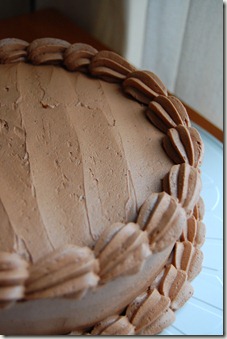
      This is one of my family’s very favorite cakes.  My dad and my brother request it for pretty much every birthday, and we’ve been known to eat it for breakfast simply because we can’t resist.  It’s an old family recipe (which probably means my Nana found the original in a magazine 50-odd years ago) and I’ve never tasted anything similar.  It’s a mocha spice cake, but not your usual spice cake, either.  I don’t know why it’s supposedly “Arabic,” but it is really, really good.


      DSC_9943


      The original cake recipe tends to get dry easily, so I’ve tweaked it somewhat and made it a little moister.  The frosting is another story – it’s a mocha frosting, and the original recipe calls for raw egg yolks, which of course is a no-no these days.  My mom and I make the frosting slightly differently every time we make it, because it’s one of those that you can get right only by tasting it.  This time the frosting was perfect, but of course I didn’t write down exactly what I did!  So I’ve given guidelines below, but I’m sure I’ll change it next time I make it.


      DSC_9947

      Arabic Spice Cake
      adapted from my Nana’s recipe

      (original source unknown)

      Cake:
      3/4 c butter (room temperature)
      1-1/2 c sugar
      2 whole eggs
      2 egg yolks
      1 Tbsp vegetable oil

      Dry ingredients:
      1-3/4 c all-purpose flour
      1/4 tsp baking powder
      1/2 tsp baking soda
      3/4 tsp salt
      3/4 tsp freshly grated nutmeg
      1 tsp cinnamon
      2 Tbsp cocoa powder

      Wet ingredients:
      3/4 c buttermilk
      1 tsp vanilla

      1 tsp lemon extract (I have also successfully used 1 tsp lemon juice, since I’d run out of lemon extract)

      1/2 c finely chopped walnuts

      Preheat the oven to 350°F.  Lightly grease and flour two 9-inch round cake pans.

      In a large bowl, cream together the butter, sugar, eggs, egg yolks, and vegetable oil.  In another bowl, sift together the dry ingredients.  In a third bowl (or liquid measuring cup), mix together the wet ingredients.

      Add the flour mixture to the butter mixture in three batches, alternating with two batches of the buttermilk mixture, beating until just combined after each.

      Fold in the walnuts.

      Pour into prepared pans and bake for 25-30 minutes, until a toothpick inserted in the center is just clean.  Do not overbake or it will be dry.  Cool in pans on rack for 15-20 minutes, then turn out onto rack to cool completely.


      Frosting (A Guideline)
      1 cup butter, room temperature
      3-4 Tbsp natural cocoa powder (not Dutch-process, and sift it if it’s lumpy)
      1.5-2 lbs powdered sugar
      Really strong coffee/espresso – I use approx. 2 Tbsp espresso powder in 4 Tbsp hot tap water.  I’ve also used Starbucks Via packets with great success.
      Milk
      Pinch salt

      In a stand mixer fitted with the paddle, cream the butter until it’s glossy.  Add 3 Tbsp cocoa, approx. 1lb of powdered sugar, and the pinch of salt.  Beat until combined.  Add about 3/4 of the coffee.

      Here’s where it becomes more guideline than recipe: from this point on, you’re trying to get both the flavor (strong coffee and strong chocolate – you don’t want the predominant flavor to be “sweet”) and the texture right.  So you’ll add more of the cocoa, powdered sugar, coffee, and milk as you aim for that balance.  I’ve also used chocolate syrup with success, when I wanted more chocolate flavor but I didn’t want it to get any drier.

      Saturday, October 16, 2010

      Monkey Bread

      DSC_8831 
      I love having a special breakfast on Saturdays.  I’ve been on a major French toast kick lately, but I didn’t have a chance to make the challah for that this week (now that I know how to make my own challah [post coming soon], I am unwilling to pay $5 for a loaf of it at the store!).  So I was looking through my recipe binder the other night, trying to find a breakfast item that sounded appealing.  This Cook’s Country/Cook’s Illustrated recipe jumped out at me!  Then I saw that it had two 1-hour rises involved.  Hm.  Not ideal for a Saturday morning, but not a complete deal-breaker.  I remembered that Deb at Smitten Kitchen had done one not too long ago, and wondered if hers was quicker, so I went a-looking for it – only to find that she’d used the same recipe!  Well.  I decided to go for it – I printed the recipe back in February 2005, so it had been languishing in my binder for far too long.


      I’m so glad I made it – yes, we didn’t get to eat it till 10:30am, but it was WORTH IT.  Mine didn’t rise as much as it was supposed to, but the finished product was scrumptious so I don’t really care. 


      I had some leftover cream cheese frosting in the fridge, so instead of making a whole new glaze I just melted that down and stirred some more milk into it – it worked great.  I think next time I make this for just the three of us, I’ll halve the recipe and bake it in my small bundt pan.  It reheats beautifully, but I don't really need this kind of temptation lying around!


      Monkey Bread with Cream Cheese Glaze
      From Cook’s Illustrated/Cook’s Country, and Smitten Kitchen.

      Wednesday, October 13, 2010

      Pumpkin Oatmeal

      DSC_8869
      It’s pumpkin season again – yay!  I make this year-round, but I make it more in the fall.  It’s so easy and flavorful and healthy.  I usually make a big batch of it early in the week and then reheat it in portions, but it can easily be scaled down.  The best part is that it’s completely customizable – use brown sugar instead of white!  Use maple syrup!  Make it sweeter or less sweet!  Use whole milk instead of skim!  Add more spices!  Add more water!  Whatever floats your boat.  In fact, when I scale it down I frequently don’t measure anything except the liquid and the oatmeal – a big spoonful of pumpkin, a dash of cinnamon, it all works pretty well.


      Pumpkin Oatmeal
      makes 5-6 servings

      4.5 cups water, milk, or combination thereof (I use 3 cups skim milk and 1.5 cups water)
      1 15-oz can or about 2 cups of pumpkin puree
      1/2 cup sugar


      heaping 1/2 tsp cinnamon
      1/2 tsp freshly-grated nutmeg
      1/8-1/4 tsp allspice
      pinch salt


      3 cups rolled oats

      In a large (4-qt.) saucepan, mix all ingredients except the oatmeal over medium-high heat.  Whisk well to get rid of lumps of cinnamon.  When it’s boiling, add the oatmeal.  Reduce heat to medium or medium low, so the mixture simmers.  Cook, stirring occasionally, for 5-10 minutes (this will depend on the oats you use and your preference; Old Fashioned Quaker Oats will be done around 5 minutes, but Bob’s Red Mill Rolled Oats will need at least 10.).  Remove from heat; cover, let sit for 5 minutes.  Serve.

      This will firm up significantly as it cools.  I have to add more milk when I reheat it on subsequent days.

      Saturday, October 9, 2010

      Pumpkin Cupcakes with Cream Cheese Frosting

      DSC_8793  

      These are one of my favorite things to make in the fall.  They are so easy and SO good – even people who don’t usually like pumpkin like these!  They can be made into mini cupcakes (like I did here), or standard cupcakes, or baked into an 11”x15” pan and cut into bars, or any number of things.  You only need one bowl. It’s a great recipe.
       DSC_8792


      Pumpkin Cupcakes
      Makes 6-7 dozen mini cupcakes or about 3 dozen standard cupcakes or about 20 bars (depending on how big you cut them)

      2 cups Bisquick mix


      2 cups sugar
      1 15-oz can (approx 2 cups) pumpkin puree (NOT pumpkin pie filling)
      1/2 cup vegetable oil
      4 eggs


      2 tsp cinnamon


      Preheat oven to 350°.  Line pans with cupcake liners (no prep needed for 11”x15” pan).  Mix Bisquick and sugar in a large bowl.  Add the other ingredients and mix until batter just comes together.  Pour batter into prepared pans (I use a #60 disher for the mini cupcakes) and bake: 15-20 minutes for mini cupcakes, 25-30 minutes for standard cupcakes, and 45-55 minutes for the 11”x15” pan. 


      Cream Cheese Frosting
      makes enough to frost all the above cupcakes, with some left over.  Maybe 3 cups?

      1 8-oz package of cream cheese, room temperature
      1 stick (4 oz.) unsalted butter, room temperature
      approx 1-1/2 lbs powdered sugar
      up to 1/4 cup milk, cream, or water
      1/2 tsp vanilla (optional)

      In the bowl of your stand mixer fitted with the paddle, combine the cream cheese and butter.  Add the powdered sugar in 2-3 batches (so you don’t end up wearing it), mixing well after each addition.  Add the vanilla, then add the milk in teaspoons until the frosting is the consistency you want.  Pipe or spread it onto the cooled cupcakes.

      Confession: when I make bars out of this, I use store-bought cream cheese frosting.  It’s yummy and simple, and I can go from zero to homemade dessert, ready to party, in under 90 minutes.  And I can either eat dinner or get ready to go out while the bars are in the oven.  Magic!
       
       
      DSC_8788

      Thursday, September 9, 2010

      Blueberry-Vanilla Jam

      DSC_8251

      I was surprised when I tasted this jam – it might be my favorite of the jams that I’ve actually canned.  Its flavor is more complex than I expected it to be, and it’s not too sweet.  It’s still a little firmer than I prefer, texture-wise, but I think I’ve decided that I just don’t like commercial pectin.  If I use it in the future, I’ll definitely use Pomona’s Universal Pectin (which is what I used here – I followed the recipe that was included with the pectin, but I added a couple of vanilla beans).  Pomona’s Universal Pectin is interesting – most commercial pectin requires a certain amount of sugar to set up, which is why a lot of jams are so sweet.  But Pomona’s pectin uses calcium (which is included in the box) to set up the pectin, so you can adjust the sugar to your heart’s content.  Most boxed pectin says things like YOU MUST FOLLOW THE RECIPE EXACTLY, so if it’s too sweet for you… well, too bad.  Pomona’s pectin, however, gave advice for developing your own recipe (in addition to the recipes they provided).  That definitely fits my style more!


      Blueberry Jam (recipe from Pomona’s Universal Pectin, on the “Recipe Card 1” in the link, plus a couple of vanilla beans.)

        © Free Blogger Templates Spain by Ourblogtemplates.com 2008

      Back to TOP